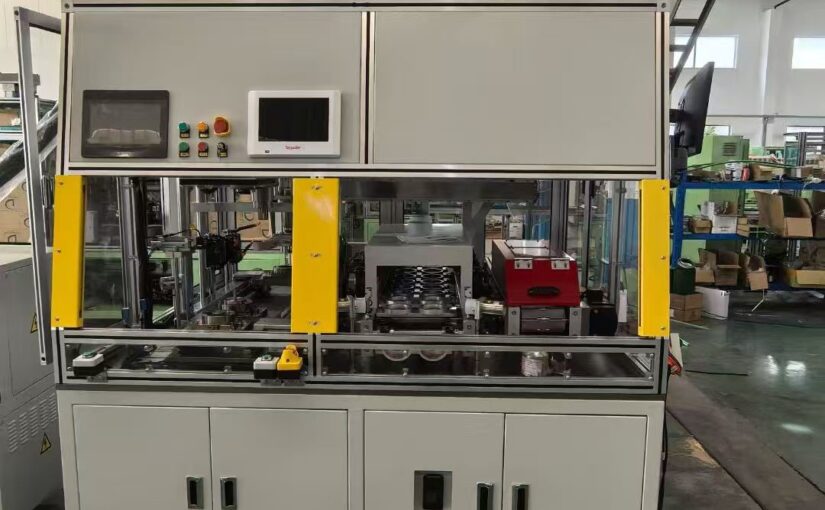
High voltage motors are an important part of many large industrial systems. They are used where equipment needs substantial and dependable mechanical power, including pumps, compressors, fans, conveyors and processing machinery. Industries such as mining, steel production, water treatment, power generation, cement and chemical processing often depend on these motors for continuous operation.
Because these motors can work under demanding electrical, mechanical and thermal conditions, their manufacturing process needs careful control. A small issue with a winding, insulation system, shaft, bearing or rotor can affect the performance of the complete motor. Modern production methods help manufacturers manage these challenges by combining specialised machinery with experienced technicians and detailed inspection procedures.
A high voltage motor manufacturing machine can support different stages of this process, depending on its design. Some machines are developed for winding operations, while others are used for coil forming, insulation treatment, component assembly, machining, balancing or testing. The purpose is not simply to automate production, but to achieve greater consistency and control where precision is important.
Why Precision Matters in High Voltage Motor Production
A high voltage motor contains several interconnected systems. The electrical winding creates the magnetic field, the stator provides the stationary magnetic structure, and the rotor converts electromagnetic forces into mechanical rotation. Supporting components such as bearings, shafts, frames and cooling arrangements must all function correctly with these main systems.
The stator core is generally produced from laminated electrical steel. These laminations need to be assembled accurately to create the intended magnetic circuit. Correct alignment and compression can influence the finished motor’s mechanical and electrical characteristics. Manufacturing equipment can help make this assembly more consistent, particularly when similar motor designs are produced repeatedly.
The winding process requires even greater attention. Conductors have to be arranged according to the motor’s electrical design, and the resulting coils need to fit correctly within the stator. High voltage windings also require an appropriate insulation system. Insulation materials need to be applied, positioned and processed carefully because the electrical reliability of the motor depends partly on the condition of this system.
Manual production still has a place in motor manufacturing, especially for specialised or low-volume products. However, repetitive operations can be difficult to keep perfectly consistent when they are performed entirely by hand. Machinery can provide controlled movement, speed, tension and positioning, helping operators achieve repeatable results.
The rotor presents another important manufacturing challenge. Since it rotates continuously during operation, its mass distribution needs to be controlled. Proper machining and dynamic balancing can help reduce unwanted vibration. This becomes particularly relevant for larger motors and applications where equipment operates for extended periods.
How Specialised Machines Support Different Operations
Modern motor manufacturing facilities generally use a combination of machines rather than relying on one piece of equipment for every operation. Each machine performs a defined task within the wider production process.
Winding machines can help produce coils with consistent dimensions and conductor placement. Operators can establish suitable settings based on the motor design, allowing the equipment to repeat the required process. Consistent winding can make later assembly easier because individual coils are more likely to conform to the expected dimensions.
Coil forming machinery can then shape the finished coils according to the required configuration. This is important because the winding needs to occupy the correct position inside the stator without creating unnecessary mechanical or insulation-related problems.
Insulation processing is another area where controlled machinery can be useful. Depending on the production method, equipment may assist with taping, wrapping, pressing or curing insulation. Maintaining suitable process conditions can help manufacturers achieve more consistent results across multiple components.
Core assembly equipment can assist with handling and positioning stator laminations and other large components. This is especially useful when motors are physically large and manual handling would require significant effort.
Machining equipment is used to produce or finish mechanical parts such as shafts, housings and other components. Computer-controlled machining can provide repeatable dimensions, but inspection remains necessary to confirm that the completed parts meet their specifications.
Balancing equipment is used to examine rotating assemblies. It can identify uneven mass distribution and provide information that technicians use when making corrections. This process helps manufacturers control vibration before the motor reaches the customer.
Consistency Is One of the Main Benefits of Automation
One of the practical advantages of manufacturing machinery is repeatability. Once a process has been correctly configured, automated equipment can perform the same basic sequence many times under controlled conditions.
This can be valuable for manufacturers producing several motors based on the same design. Consistent winding dimensions, forming pressure, machining parameters or other process characteristics can reduce unnecessary differences between products.
However, automation should not be confused with guaranteed quality. Machinery can only perform according to its programming, setup and physical condition. Tool wear, incorrect calibration, material variation and maintenance problems can still affect production.
For this reason, skilled operators remain important. They monitor the equipment, carry out routine checks and respond when production conditions change. Engineers may also analyse production data to determine whether a particular process needs adjustment.
A balanced manufacturing system therefore combines automated equipment with human supervision. The machine provides repeatability, while experienced personnel provide technical judgement.
Testing Helps Identify Problems Before Delivery
The manufacturing process does not end when the motor has been assembled. Testing and inspection are necessary to determine whether the finished product meets its specified requirements.
Electrical tests can include measurements of winding resistance and insulation resistance, together with other checks appropriate to the motor design. Where required, high voltage testing can be used to assess the electrical integrity of the insulation system.
Mechanical inspection may include checking shaft dimensions, alignment, rotor balance, bearings and other components. Manufacturers can also monitor vibration and temperature during operational testing.
Performance testing provides further information about how the motor behaves under controlled conditions. Depending on the application, engineers may measure current, speed, temperature rise, vibration and other relevant characteristics.
The information obtained during testing can be valuable beyond the individual motor. If a recurring issue appears across several units, manufacturers can investigate the production process to determine its source. This can lead to changes in machinery settings, materials, tooling, assembly procedures or inspection methods.
Choosing Manufacturing Equipment Requires Careful Planning
There is no single machine that is suitable for every high voltage motor manufacturer. Equipment should be selected according to the actual requirements of the production facility.
Motor size is an important factor because large components require machinery with suitable working capacity. Production volume also matters. A factory producing hundreds of similar components may benefit from a higher level of automation, while a manufacturer producing customised motors may need equipment with greater flexibility.
Accuracy and repeatability should also be considered. Machinery needs to achieve the tolerances required for the relevant production operation. At the same time, manufacturers should examine maintenance requirements, operator training, spare parts availability and technical support.
Factory layout is another practical consideration. Large motors and their components require adequate space for storage, movement, assembly and testing. Equipment should be arranged so that materials can move efficiently between production stages.
The most suitable high voltage motor manufacturing machine is therefore not necessarily the most sophisticated or expensive option. It should be the machine that fits the manufacturer’s products, production volumes, available workforce and quality requirements.
Digital Manufacturing Is Adding More Process Visibility
Manufacturing equipment is becoming increasingly connected. Digital controls and sensors can provide information about machine operation and selected production parameters.
This information can help manufacturers identify unusual patterns. For example, if a machine gradually requires more adjustments to achieve the same result, the data may indicate that maintenance or calibration is needed.
Digital records can also support quality traceability. Manufacturers can keep information about production batches, inspection results and selected process conditions. If a problem is discovered later, these records can make it easier to investigate what happened during production.
Predictive maintenance is another potential use of production data. Instead of relying entirely on fixed maintenance schedules, manufacturers can monitor equipment behaviour and investigate signs of wear before a serious failure occurs. The effectiveness of this approach depends on the quality of the monitoring system and how accurately the collected information is interpreted.
Skilled People Remain Essential
Even with advanced machinery, high voltage motor manufacturing still depends heavily on engineering knowledge. Employees need to understand the relationship between manufacturing processes and motor performance.
Engineers establish production methods and specifications, technicians operate and maintain equipment, and quality teams verify the finished product. Their combined experience helps ensure that machinery is used correctly rather than simply operated according to a basic programme.
Training is particularly important when new machinery is introduced. Operators need to understand machine controls, safety procedures, inspection requirements and common signs of equipment problems.
Workplace safety also needs continuous attention. High voltage motor production can involve heavy components, rotating machinery, electrical systems and lifting operations. Proper guarding, isolation procedures, lifting equipment and employee training should form part of the manufacturing environment.
Conclusion
High voltage motor production is a complex process that requires accuracy across electrical, mechanical and assembly operations. Modern manufacturing machinery can help control repetitive tasks, improve consistency and provide useful production information, but it works best as part of a complete quality system.
A high voltage motor manufacturing machine can support winding, forming, insulation, assembly, machining or balancing operations depending on its purpose. When the equipment is correctly selected, maintained and operated, it can contribute to a more controlled production process.
Ultimately, reliable motor manufacturing depends on the combination of suitable machinery, quality materials, careful engineering, trained workers and thorough testing. As production technology continues to develop, manufacturers can use greater automation and digital monitoring where they provide practical benefits while retaining the human expertise needed to manage complex industrial equipment.